
The Story of Money
To understand bitcoin, it helps to understand what money actually is — and how many times humanity has reinvented it. Scroll through 10,000 years of trying to solve the same problem: how do strangers trade with each other and trust the result?
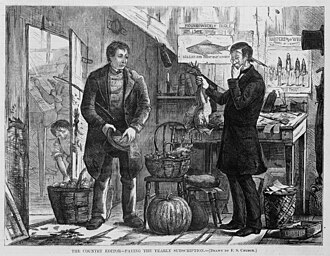
~9000 BCE
Barter, cattle, and grain
The earliest economies traded goods directly — livestock, grain, tools. Barter works between neighbors but fails between strangers: you have to want exactly what the other person offers, at the same moment. Money exists to solve this "double coincidence of wants."

~1200 BCE
Cowrie shells — the first widespread money
Cowrie shells were used as currency across China, India, and Africa for thousands of years. They were durable, portable, hard to counterfeit, and naturally scarce — the same properties every good money since has needed.
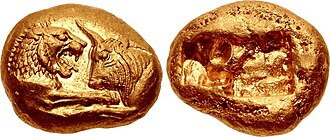
~600 BCE
Lydia mints the first coins
The kingdom of Lydia (modern Turkey) struck the first standardized coins from electrum, a gold-silver alloy, stamped with an official seal. For the first time, a government guaranteed the weight and purity of money — and trade exploded across the Mediterranean.
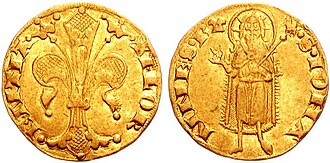
1252 CE
The gold florin powers global trade
Florence's gold florin kept the same weight and purity for centuries, making it the trusted international currency of Renaissance Europe — an early lesson that money people trust is money whose supply doesn't get quietly debased.
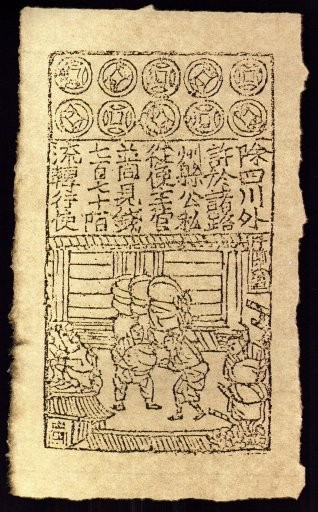
~1000 CE
China invents paper money
Song dynasty merchants began using paper receipts (jiaozi) backed by coin deposits — the first paper currency. It was revolutionary and cautionary: within a couple of centuries, over-printing had produced some of history's first paper-money inflations.
1694
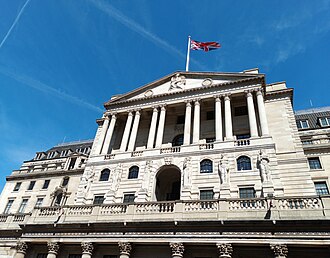
The Bank of England and modern central banking
Founded to fund a war, the Bank of England pioneered the model of a central bank issuing notes backed by government debt. Most of the world's money systems today descend from this design.
1792
The United States dollar is born
The Coinage Act defined the dollar in fixed amounts of silver and gold and established the U.S. Mint. For most of the next 180 years, a dollar was legally a claim on a specific weight of precious metal.
1870s–1914
The classical gold standard
Most major economies fixed their currencies to gold, making exchange rates stable worldwide: a British pound was 113 grains of gold, a U.S. dollar 23.22 grains, so £1 always equaled about $4.87. Global trade and investment flourished — until World War I forced governments off gold to print for the war effort.
1913
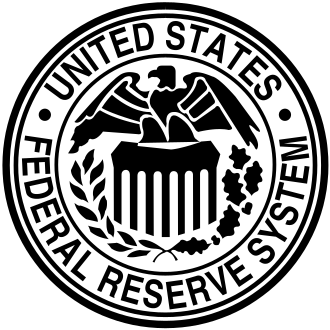
The Federal Reserve is created
After the Panic of 1907, Congress created the Federal Reserve as lender of last resort. The Fed gained the power to expand and contract the supply of dollars — a power at the center of every monetary debate since.
1933
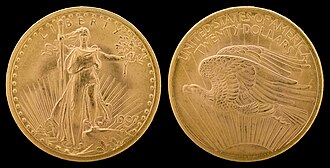
Americans ordered to hand in their gold
During the Great Depression, Executive Order 6102 required U.S. citizens to sell their gold to the government at $20.67/oz. The following year the official price was raised to $35 — an overnight 41% devaluation of the dollar. Owning gold remained largely illegal for Americans until 1974.

1944
Bretton Woods: the dollar becomes the world's currency
As WWII ended, 44 nations agreed to peg their currencies to the U.S. dollar, and the dollar to gold at $35/oz. Only foreign governments could redeem dollars for gold. The system made the dollar the world's reserve currency — a status it still holds.
August 15, 1971
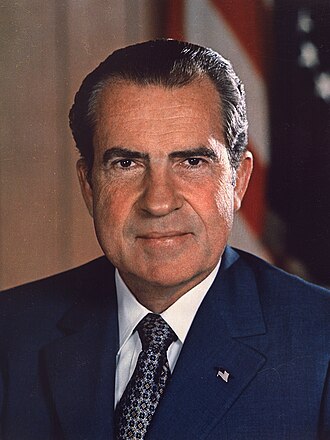
The Nixon shock: the dollar leaves gold
With gold reserves draining, President Nixon "temporarily" suspended the dollar's convertibility into gold. The suspension became permanent. For the first time in history, essentially all of the world's money became fiat — backed by nothing but government decree. Since 1971 the dollar has lost over 85% of its purchasing power, and gold has risen from $35 to over $4,000/oz.
1999
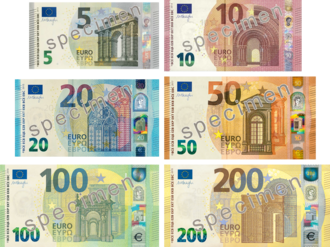
The euro launches
Nineteen-plus nations eventually merged their currencies into the euro — the largest monetary experiment of the fiat era, and proof that money keeps being redesigned even in modern times.
2008
The global financial crisis
Bank failures triggered the worst financial crisis since the Depression. Governments responded with unprecedented bailouts and money creation ("quantitative easing"). Trust in the financial system cracked — and in that exact moment, an alternative appeared.
October 31, 2008
The Bitcoin whitepaper
A pseudonymous author, Satoshi Nakamoto, published nine pages describing "a peer-to-peer electronic cash system" — money with a fixed supply of 21 million, no central issuer, and no need to trust a bank. On January 3, 2009, the first block was mined, embedding a newspaper headline about bank bailouts.
May 22, 2010
Bitcoin Pizza Day — the first real purchase
A programmer paid 10,000 BTC for two pizzas — roughly $41 at the time. It was the first documented purchase of physical goods with bitcoin, proving it could function as money. Those coins would later be worth hundreds of millions of dollars.
2013–2017
From experiment to asset class
Bitcoin crossed $1,000 in 2013, survived the Mt. Gox exchange collapse in 2014, and reached nearly $20,000 in 2017 as the world took notice. Extreme booms and busts — but each cycle's low was higher than the last.
2020–2021
Institutions and nations arrive
Public companies began holding bitcoin as a treasury asset, and in 2021 El Salvador made bitcoin legal tender — the first country to do so. Bitcoin reached $69,000 as it entered mainstream finance.
2024–today
Bitcoin joins the financial mainstream
U.S. spot bitcoin ETFs launched in January 2024, letting anyone hold bitcoin in an ordinary brokerage account, and the fourth "halving" cut new supply again. Fifteen years in, an asset that started at a fraction of a cent trades alongside gold and stocks — see for yourself on our price charts.
Images via Wikipedia/Wikimedia Commons.